Bare-Root vs Potted vs Tissue Culture Aquarium Plants
By James Grandez, Florida aquatic plant grower · Updated November 16, 2026

Quick answer: Bare-root bundles give you the most plants for the money and are how the aquarium trade has always moved stem plants. Potted plants cost more per plant but are easy to handle and good for rooted plants. Tissue culture cups are lab-grown, cost the most per plant, and are the cleanest option if you can't risk any hitchhikers (for example, a prized shrimp colony). For filling a new tank on a budget, bare-root wins.
The comparison at a glance
| Bare-root bundles | Potted plants | Tissue culture (TC) cups | |
|---|---|---|---|
| What arrives | Stems or cuttings held with a band, packed damp. No pot, no gravel | Plant in a small plastic basket with rock wool around the roots | Small plantlets in a sealed cup of clear nutrient gel |
| Typical plants per purchase | Several stems per bundle | One plant (sometimes a few small ones) | One cup, often many tiny plantlets |
| Cost per plant | Lowest | Medium to high | Highest for its size |
| Size on arrival | Full-size stems, ready to plant | Full-size plant | Small; takes weeks to fill in |
| Chance of hitchhikers (a tiny snail, duckweed) | Possible: nursery-grown, so rinse before planting | Possible: rock wool can hide them | Very low: grown in sterile lab conditions |
| Melting / leaf drop after planting | Common, temporary | Common, temporary | Also happens; tiny plants are fragile at first |
| Work to plant | Cut the band, separate the stems, plant each one | Remove pot and all rock wool, then plant | Wash off all the gel, plant in small clumps |
| Best for | Filling a tank fast, stem plants, budgets, beginners | Swords, crypts and other rooted plants; gifts | Carpets, shrimp tanks, keeping a tank completely clean |

Bare-root bundles
This is how most stem plants have always been sold to fish stores: cut from the grower's beds, bunched, banded and shipped damp.
Why they cost less: you aren't paying for a pot, rock wool, or the extra weeks a plant spends in a pot before sale. That's why our 9-bundle variety pack costs about what a single potted plant does at many stores.
What to know:
- Each bundle is several stems. Separate them before planting. A banded clump planted whole holds water in the middle and rots from the inside.
- Stem plants root from the cut, so a soft stem end isn't a dead plant. Trim back to firm green tissue and plant the healthy top.
- Nursery stock can carry a little duckweed or a tiny snail. Rinse every plant before it goes in the tank.
Choose bare-root if: you're setting up a new tank, want a jungle look without spending a fortune, or mostly want stem plants.
Potted plants
Potted aquarium plants sit in a plastic basket packed with rock wool, a mineral fiber that holds the roots.
What to know:
- Take all the rock wool off. Left on, it traps waste around the roots and the plant often struggles. Tease it out gently with your fingers or tweezers.
- You can often split one pot into several plants once the rock wool is off.
- Pots are handy for rooted plants like swords and crypts, because the root ball is intact.
Choose potted if: you want a few specific showpiece plants, you're buying rooted plants, or you prefer the convenience.
Tissue culture (TC) plants
TC plants are grown from tiny pieces of plant in a sterile lab, then sealed in a cup of nutrient gel.
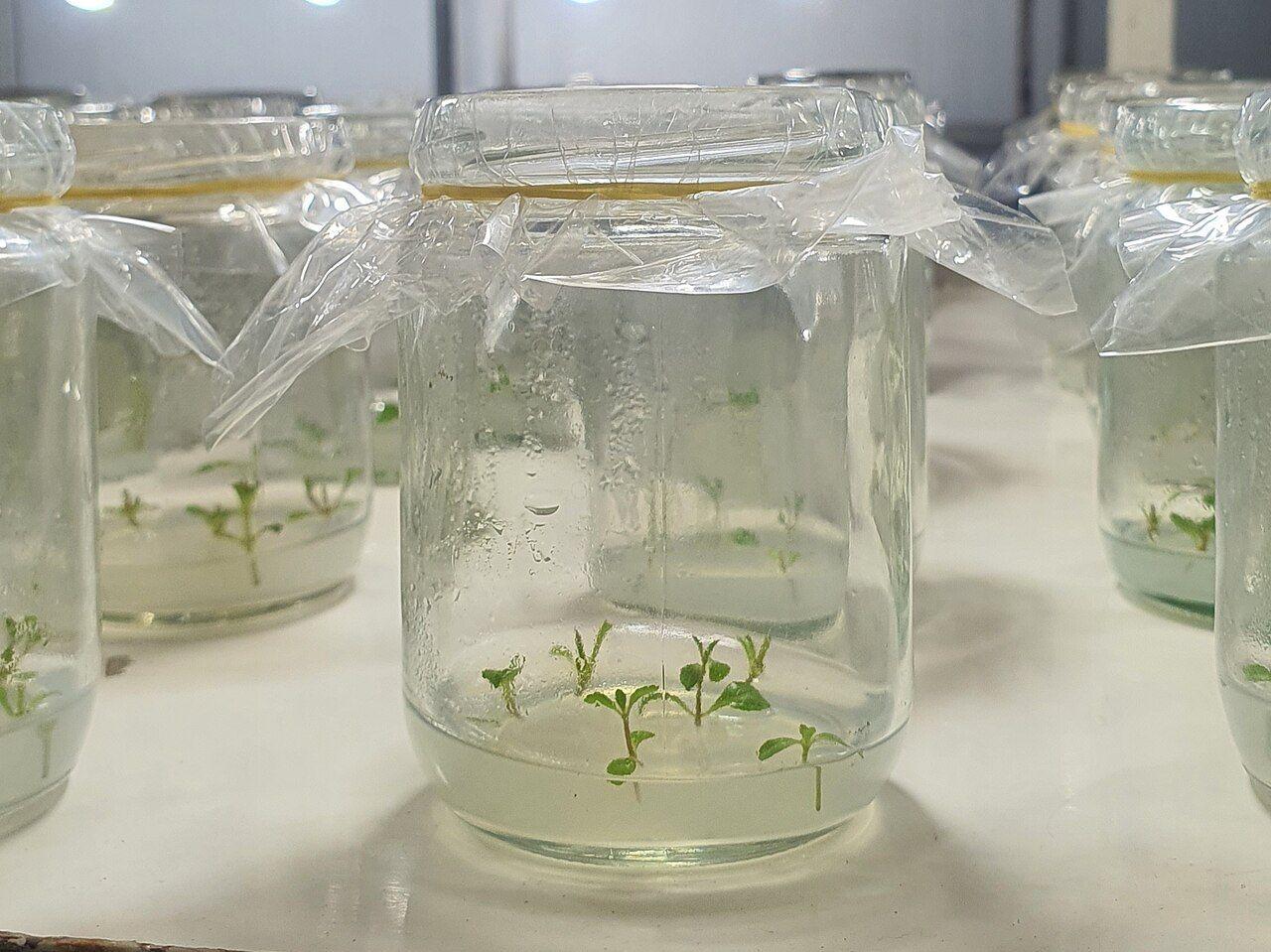
What to know:
- Because they're grown sterile, they're the least likely to bring snails, algae or pesticide residue.
- They're small. A cup that looks full is usually a mat of tiny plantlets that need weeks to grow into a tank.
- Rinse off every bit of gel before planting, or it will cloud the water and feed algae.
Choose TC if: you keep sensitive shrimp, you're growing a carpet, or you need a tank to stay completely free of hitchhikers.
"Emersed" vs "submersed": why plants change after planting
Many aquarium plants are farmed with their leaves out of the water (emersed), because they grow faster in air and don't get algae. Once they're underwater, they grow a new kind of leaf suited to life under water and drop some of the old ones.
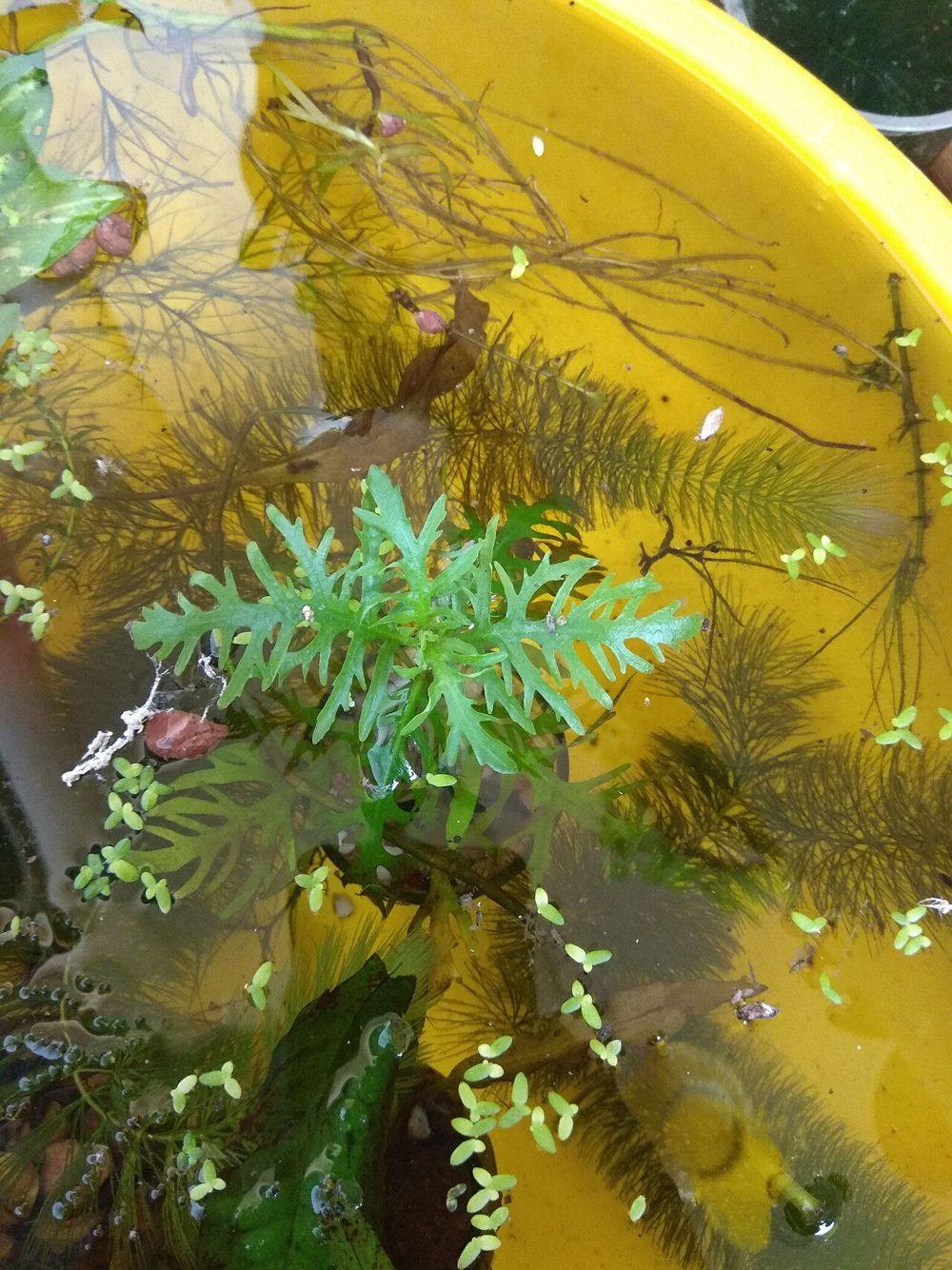
This happens with bare-root, potted and TC plants alike. A few yellowing or melting older leaves in the first couple of weeks is normal, and new growth follows. Our guide to plant melt explains what to trim and what to leave.
Which should you buy?
| If you… | Buy |
|---|---|
| Are filling a new 10 to 75 gallon tank | Bare-root bundles (tank-size bundles) |
| Want the most plants for $30 | 9-bundle variety pack |
| Want a few hardy plants on driftwood | Anubias and java fern (Anubias bundle) |
| Keep expensive shrimp and want zero risk | Tissue culture |
| Want a lawn-like carpet | Tissue culture carpeting plants |
Shop the plants in this guide
All bundles → NEW
Live Aquarium Plants Variety Pack - 9 Bundles, Easy Beginner Low-Light Starter Kit
Nine bundles of hardy, beginner-friendly aquarium plants in one box — a mixed assortment of easy stem and rosette plants such as Bacopa, Ludwigia and Rotala, picked by our growers each week. Bare-root bundles, so you get far more than nine plants once separated.
 3-Pack
Anubias Bundle — Barteri, Coffeefolia & Nana Petite
Anubias barteri varieties
Three different Anubias in one bundle: broad-leaf Barteri, rippled bronze-new-growth Coffeefolia and compact Nana Petite. Hardy, slow-growing rhizome plants for low light — tie them to rock or driftwood and never bury the rhizome.
 Buy 2 Get 1
Anacharis (Egeria densa) — Buy 2 Get 1 Free, 3 Bunches
Egeria densa
Three bunches of Anacharis for the price of two, four stems per bunch. A classic, fast-growing oxygenating stem plant that soaks up excess nutrients and fills a tank or pond quickly. Low light, no CO2 needed.
FAQ
Are bare-root plants lower quality?↓
Will bare-root plants survive shipping?↓
Do I need to quarantine new plants?↓
Can I plant rock wool?↓
Written by James Grandez, Shore Aquatic. We grow and ship live aquatic plants from South Florida.