How Many Plants Does My Tank Need?
By James Grandez, Florida aquatic plant grower · Updated November 16, 2026
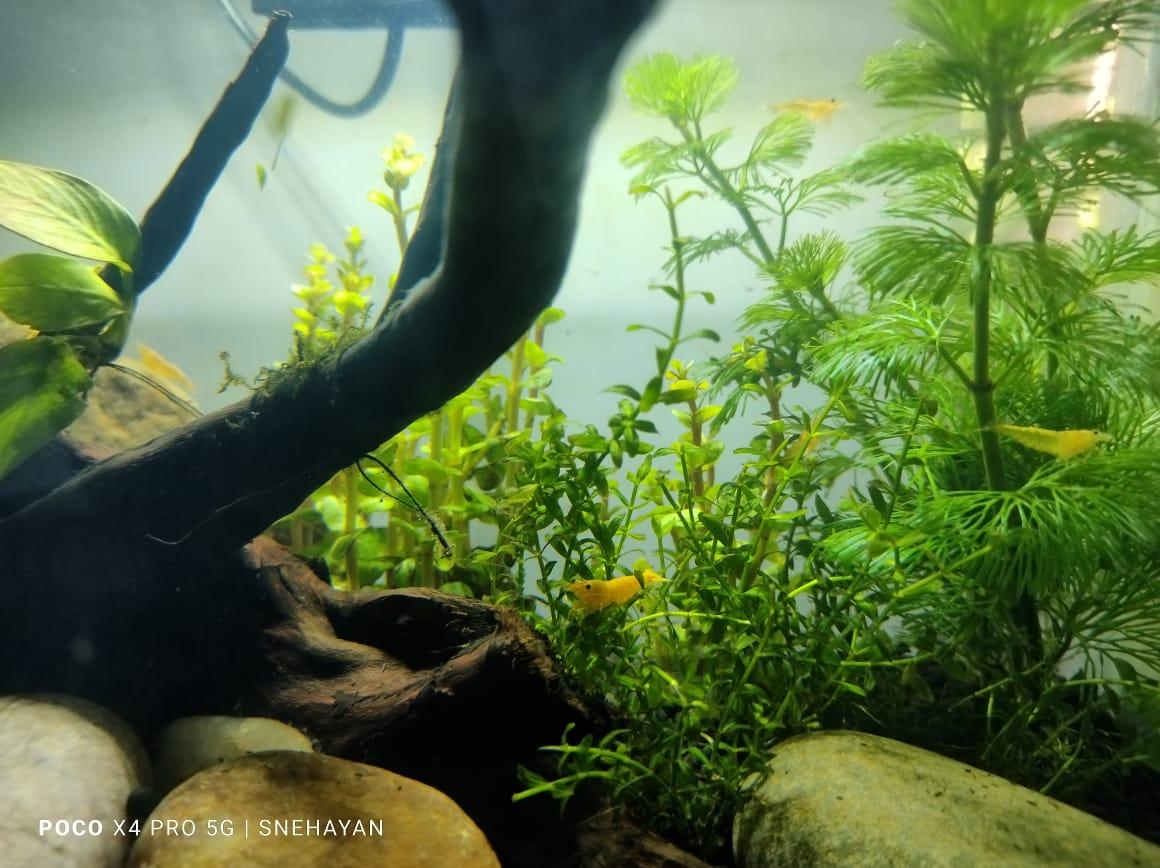
Quick answer: For a lightly planted look, plan on about one plant for every 2 gallons (a 20 gallon tank needs roughly 10). For a full, lush tank, plan on one plant every 3 inches across the bottom (roughly 25 to 40 in a 20 gallon long). Most people land in the middle. Start with more than you think, because a heavily planted tank is easier to keep free of algae than a sparse one.
Plant calculator
You need about
25 plants
Back 13 · Middle 8 · Front 4
Individual stems or plants after separating bundles.

Plant count chart by tank size
"Plants" here means individual stems or rooted plants once they are separated, not bundles or pots. One Shore Aquatic bundle splits into several plants.
| Tank | Footprint (L × D) | Light planting | Medium | Full / jungle | Our matching pack |
|---|---|---|---|---|---|
| 5 gal | 16 × 8 in | 4 | 9 | 14 | 9-Bundle Variety Pack |
| 10 gal | 20 × 10 in | 5 | 14 | 22 | 10 Gallon Tank Bundle (21+ plants) |
| 20 gal long | 30 × 12 in | 10 | 25 | 40 | 20 Gallon Tank Bundle (35+ plants) |
| 20 gal high | 24 × 12 in | 10 | 21 | 32 | 20 Gallon Tank Bundle (35+ plants) |
| 29 gal | 30 × 12 in | 14 | 27 | 40 | 20 Gallon Tank Bundle (35+ plants) |
| 40 gal breeder | 36 × 18 in | 20 | 46 | 72 | 55 Gallon Tank Bundle (61+ plants) |
| 55 gal | 48 × 13 in | 28 | 48 | 69 | 55 Gallon Tank Bundle (61+ plants) |
| 75 gal | 48 × 18 in | 38 | 67 | 96 | 75 Gallon Tank Bundle (81+ plants) |
How we worked these out:
- Light planting is about one plant per 2 gallons, with at least 4. It's in line with common beginner shopping lists, which suggest around 6 plants for a 10 gallon and 10 for a 20 gallon.
- Full / jungle is one plant every 3 inches across the bottom (length × depth ÷ 9). This is the spacing many experienced keepers use for a properly planted tank.
- Medium is halfway between the two.
Tank floor area matters more than gallons. A 20 long and a 29 have the same footprint, so they take about the same number of plants. A 20 high holds the same water as a 20 long but has less floor.
Why more plants is usually better
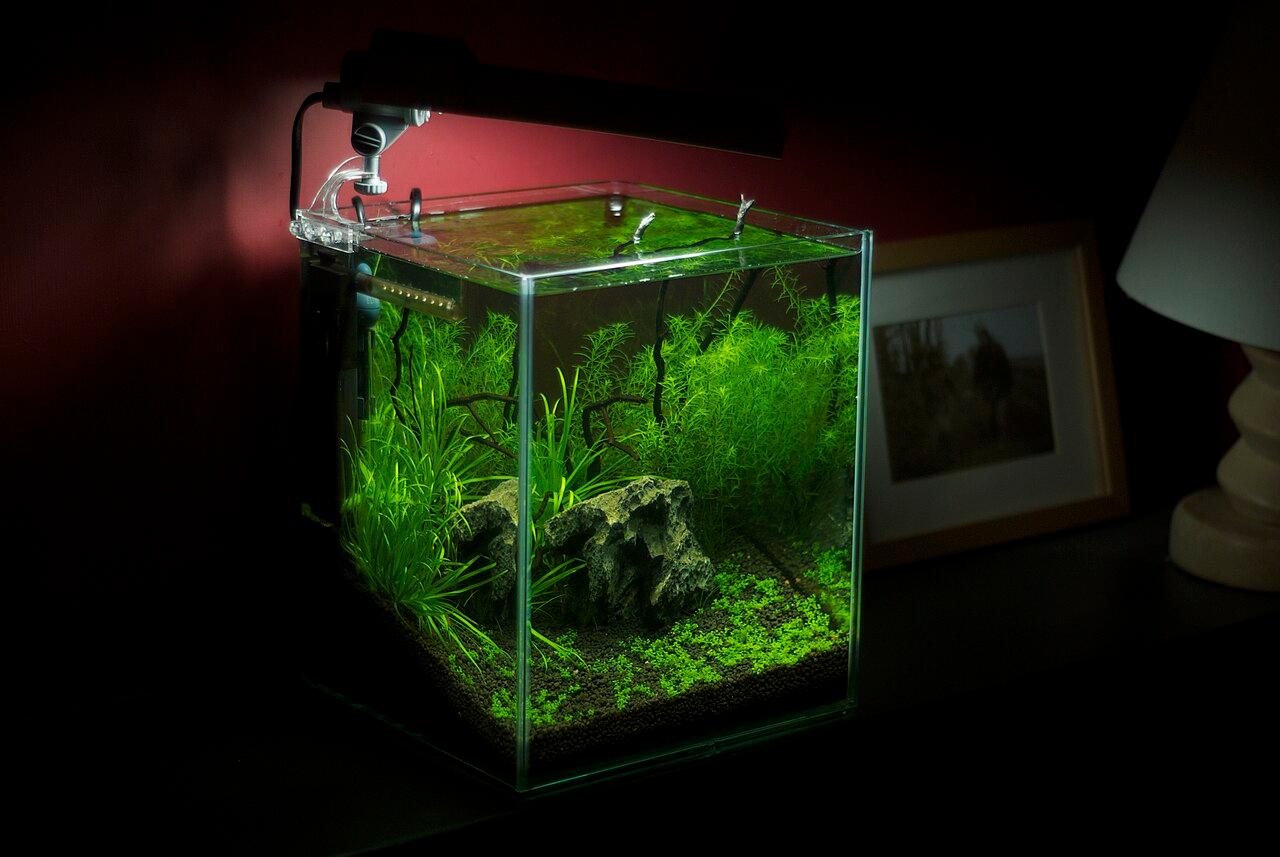
- Algae control. Plants and algae compete for the same light and nutrients. A tank with a few plants leaves plenty of both for algae. A tank that's packed with fast growers takes most of it.
- Cleaner water. Growing plants take up nitrate and ammonia, the waste that builds up between water changes.
- Easier recovery. A few leaves melting or dying back after planting is normal. In a full tank, the rest carry on and you barely notice. In a sparse tank, one plant struggling is a third of your scape.
- Shelter. Fish and shrimp hide, rest and spawn in dense planting. Shy fish come out more when they have cover nearby.
Split them by zone: foreground, midground, background
A simple rule that works for any tank size is roughly 20% foreground, 30% midground, 50% background. Background plants are tall and fast, and they do most of the nutrient work.
| Zone | What it's for | Easy, no-CO2 picks we grow |
|---|---|---|
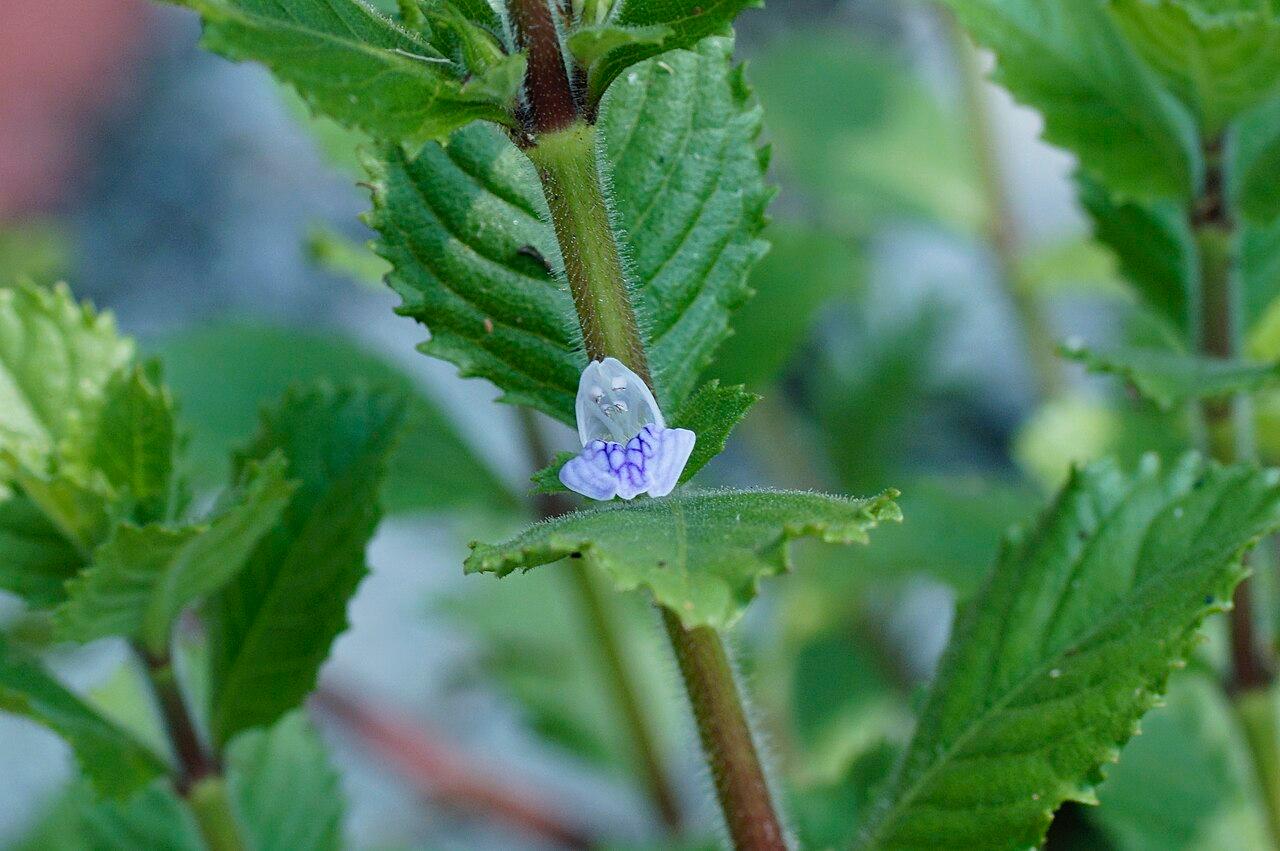
| Background (back third) | Height, fills the back glass, fastest growers | Water Wisteria (Hygrophila difformis), Ludwigia repens, Bacopa caroliniana, Rotala indica, Amazon sword |
| Midground (middle) | Bulk and texture | Cryptocoryne wendtii (green and bronze), narrow chain sword |
| Foreground (front) | Low cover, frames the tank | Sagittaria subulata, micro sword |
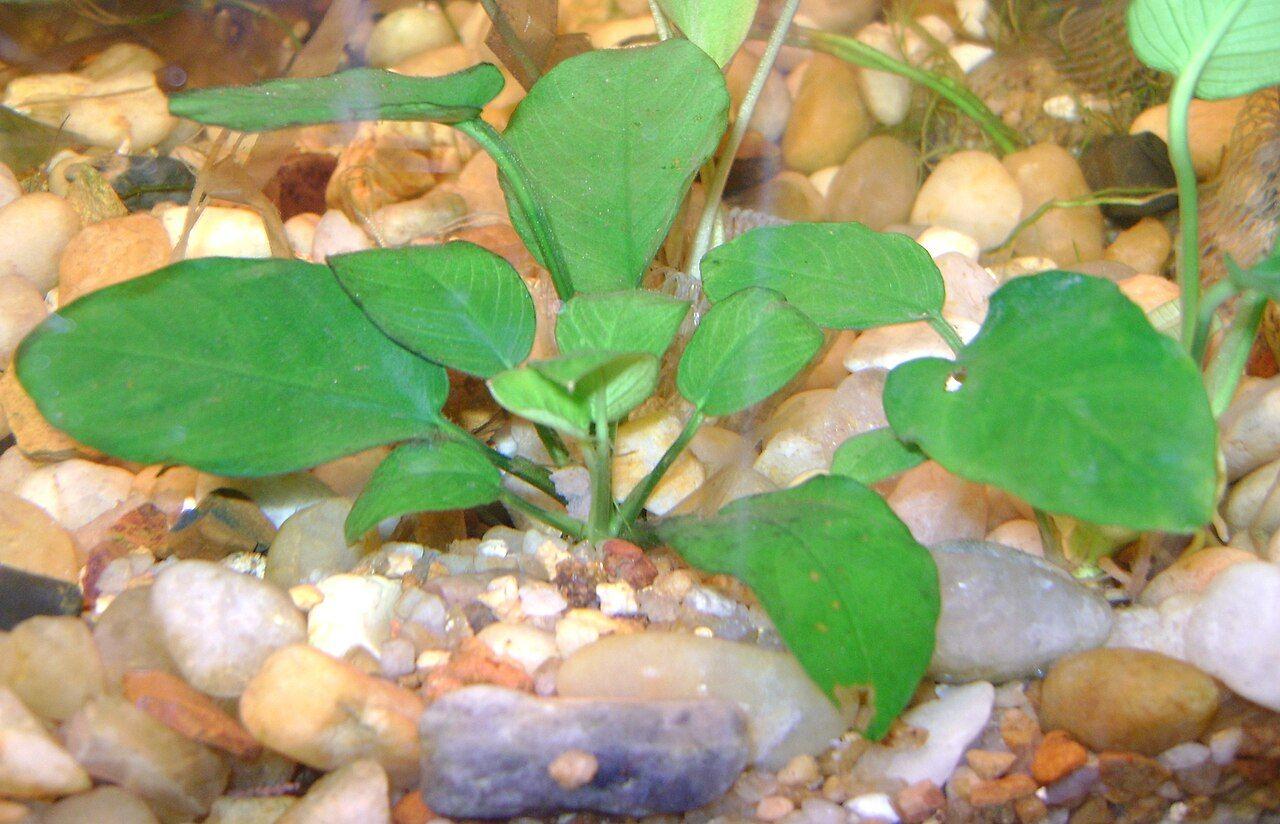
| On wood or rock (anywhere) | Low-light, slow growing, never buried | Anubias nana, Java fern |
| Surface (optional) | Shade, cover for bettas and fry, soaks up nitrate fast | Red root floaters, salvinia |
Stem plants vs rooted plants: get a mix
- Stem plants (wisteria, ludwigia, bacopa, rotala) grow fast, fill space quickly and are cheap to buy in bundles. You trim them and replant the tops, so a few bundles become a lot of plants over time.
- Rooted plants (crypts, swords, sagittaria) grow slower but are long-lived and stay put. They feed from the gravel, so a root tab near them helps.
- Attached plants (anubias, java fern) are the toughest of all and grow in very low light.
A good starter tank is roughly three quarters rooted and attached plants, one quarter stem plants. The rooted plants give it structure and the stem plants do the fast nutrient work while the tank settles in. That's the mix we use in our tank-size bundles.
Do I need special lights, CO2 or soil?
No. Every plant in this guide grows in:
- Low to medium light (the light that came with most aquarium kits is often enough for anubias, java fern and crypts; brighter is better for stem plants)
- No added CO2
- Plain gravel or sand, with root tabs pushed in near rooted plants
- 72 to 82 °F
If you want faster growth later, a better light and a weekly all-in-one liquid fertilizer are the next upgrades. CO2 is optional.
How many bundles is that?
Our bundles are bare-root bunches of several stems or cuttings each, so one bundle is more than one plant.
- The 9-Bundle Variety Pack is a good fit for a 5 or 10 gallon tank. Separated, nine bundles give you far more than nine plants. (see the pack, $29.99)
- The Planted Tank Bundle is sized for you: pick 10, 20, 55 or 75 gallon and the plant count is already matched to the "full" column above.
Shop the plants in this guide
All bundles → NEW
Live Aquarium Plants Variety Pack - 9 Bundles, Easy Beginner Low-Light Starter Kit
Nine bundles of hardy, beginner-friendly aquarium plants in one box — a mixed assortment of easy stem and rosette plants such as Bacopa, Ludwigia and Rotala, picked by our growers each week. Bare-root bundles, so you get far more than nine plants once separated.
 3-Pack
Anubias Bundle — Barteri, Coffeefolia & Nana Petite
Anubias barteri varieties
Three different Anubias in one bundle: broad-leaf Barteri, rippled bronze-new-growth Coffeefolia and compact Nana Petite. Hardy, slow-growing rhizome plants for low light — tie them to rock or driftwood and never bury the rhizome.
 2-Pack
Green Plant Bundle — Anubias Barteri & Java Fern
Anubias barteri & Microsorum pteropus
The two easiest aquarium plants in one bundle: one Anubias barteri and one Java fern. Both grow on rock or driftwood, need only low light and no CO2, and give fish and shrimp natural cover.
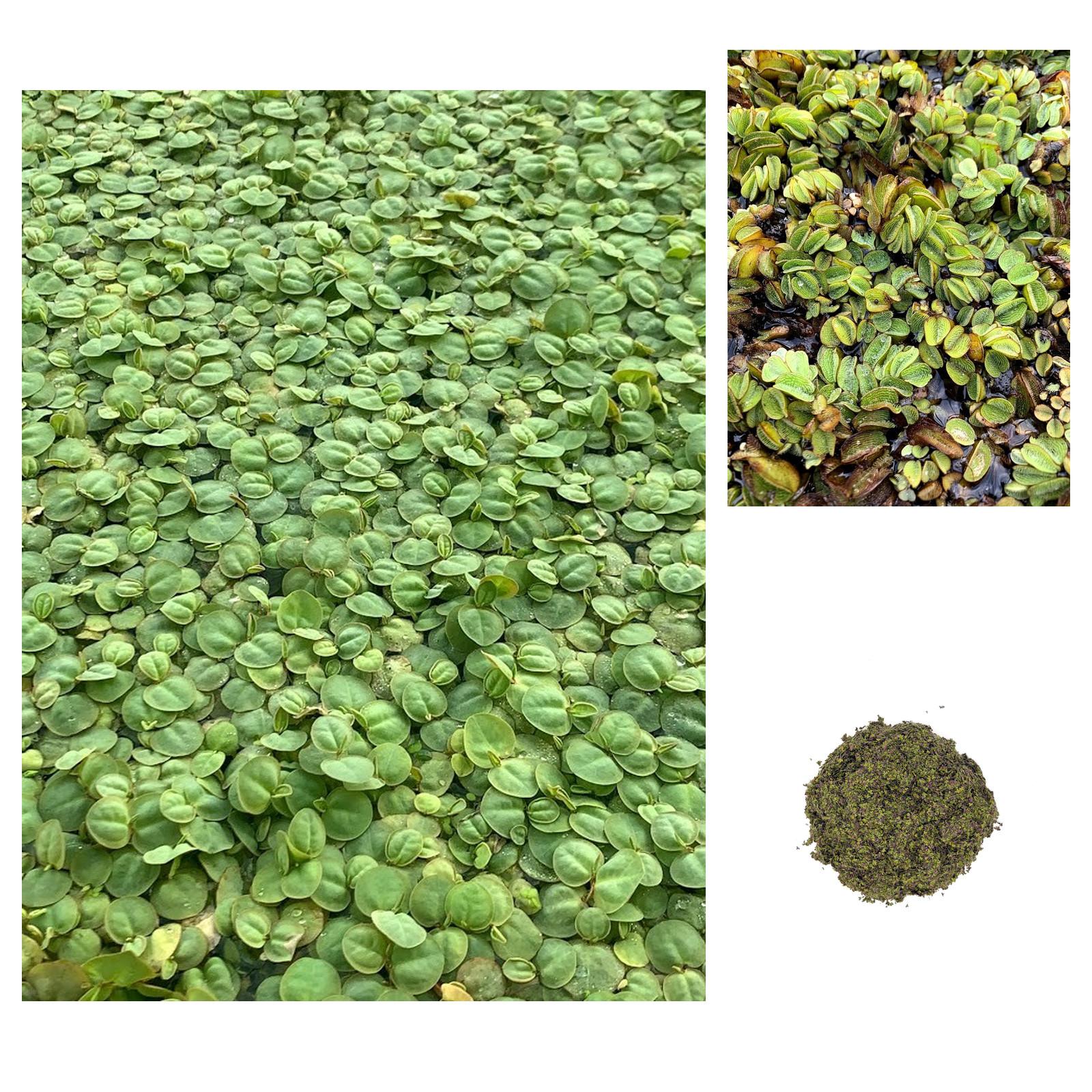 3-Plant Bundle
Floating Plant Bundle — Red Root Floaters, Salvinia & Duckweed
Phyllanthus fluitans, Salvinia minima, Lemna minor
Three fast-growing floating plants in one bundle: a 4 oz cup of Red Root Floaters plus fresh portions of Salvinia and Duckweed. Floating plants shade the surface, soak up excess nutrients to starve algae, and give fish and fry cover at the top of the tank. Red Root Floaters develop red roots and reddish leaves under bright light, Salvinia adds fuzzy oval leaves, and Duckweed spreads a fine green carpet. Florida-grown and shipped fresh — free shipping included.
FAQ
Can I have too many plants?↓
Should I add all the plants at once?↓
How far apart should I plant stems?↓
Do plants count toward my fish stocking?↓
What if my tank isn't on the chart?↓
Written by James Grandez, Shore Aquatic. We grow and ship live aquatic plants from South Florida.